Your garage door spring is under enormous tension every single time the door moves — and it’s the part most likely to fail. In Central Florida, from Kissimmee to Orlando, our heat and humidity speed up that wear, so springs here often reach the end of their life sooner than the “average” you’ll read online. Learning the warning signs can save you from a door that suddenly won’t open, usually at the worst possible moment.
How Your Garage Door Spring Actually Works
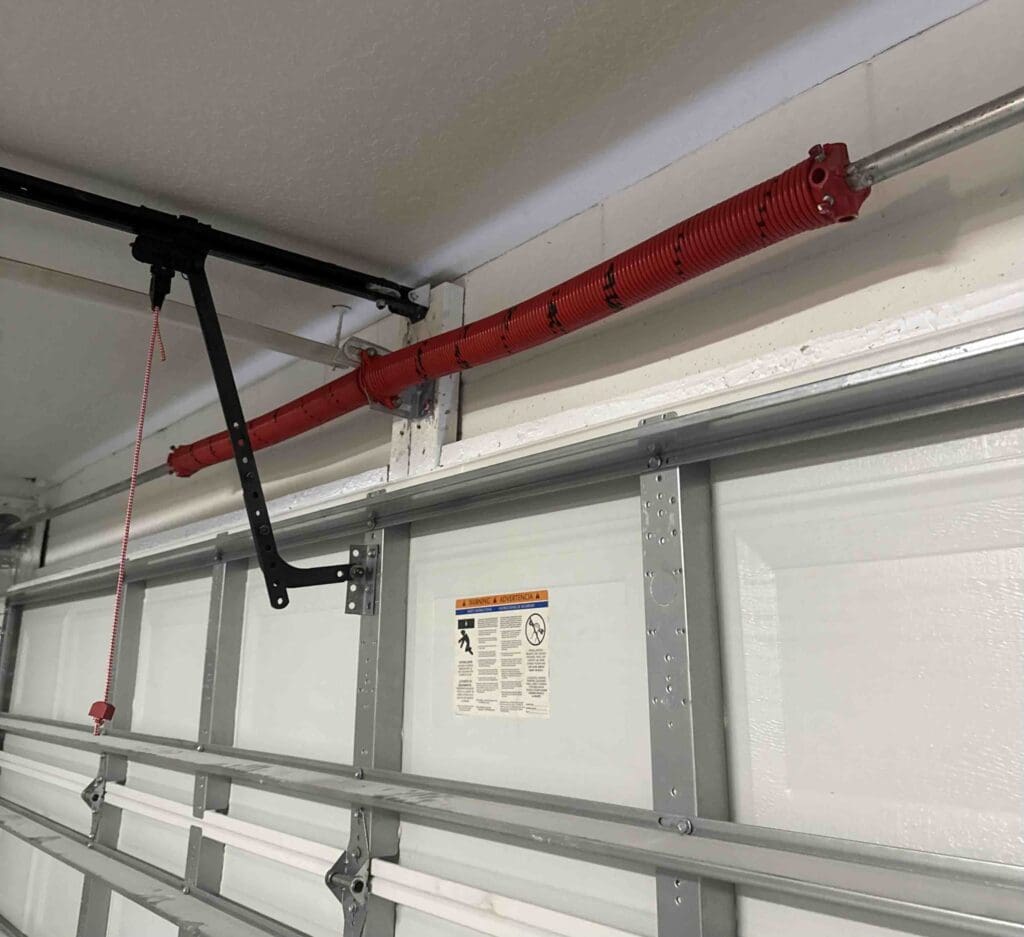
Almost every garage door uses one of two spring systems. Torsion springs mount on a metal shaft above the door opening and are the most common on modern doors. Extension springs run along the horizontal tracks on either side. Either way, the spring’s job is the same: it counterbalances the weight of the door — often 100 to 350+ pounds — so your opener (and your back) can lift it easily.
Springs are rated in cycles, where one full open-and-close equals one cycle. Standard springs are typically built for around 10,000 cycles, while high-cycle springs are rated for roughly 20,000 to 30,000 or more. A busy household that opens the door four to six times a day burns through those cycles faster than you’d think — which is exactly why springs wear out on a predictable schedule.
7 Signs Your Garage Door Spring Is Failing
- You heard a loud bang from the garage. A snapped torsion spring makes a sound like a firecracker or a gunshot. If you heard it and the door won’t work, the spring is the usual culprit.
- The door won’t open — or the opener strains and reverses. Without a working spring, the opener is trying to lift the full weight of the door alone, which it isn’t built to do.
- There’s a visible gap in the coil. Walk out and look at the torsion spring above the door. A two-to-three-inch gap where the metal separated is a clear break.
- The door feels extremely heavy by hand. With the opener disconnected, a balanced door should lift with light effort and stay put halfway. If it slams down or feels like dead weight, the spring has lost its tension.
- The door opens crooked or one side lags. On a two-spring setup, one failing spring pulls the door up unevenly.
- Movement is jerky, or the door drops fast. Uneven, bouncy travel means the counterbalance is off.
- Cables are loose or hanging. Cables and springs work together and often fail around the same time.
One more Florida-specific tell: rust and corrosion on the coils. Reddish pitting on the metal is a weak point waiting to crack, and it shows up far more often in our humid garages than in drier climates.
Why Central Florida Is Especially Hard on Springs
Humidity and daily temperature swings cause condensation to form on bare metal. Over time that moisture pits and corrodes the steel, creating weak spots where the spring eventually snaps. Add year-round heat cycling and, for homes closer to the coast, salt in the air, and you have a climate that quietly shortens spring life. It’s the main reason we often recommend galvanized or coated high-cycle springs for homeowners here rather than the cheapest standard option.
Please Don’t DIY a Spring Replacement
This is the one garage door repair we genuinely urge you not to attempt yourself. A wound torsion spring stores a tremendous amount of energy, and a slip with the winding bars can cause serious injury. Beyond the danger, sizing a replacement correctly means matching wire diameter, inside diameter, length, and wind direction to your exact door — get any of those wrong and the new spring either fails quickly or throws the door out of balance. Leave this one to a trained technician.
What Professional Spring Replacement Includes
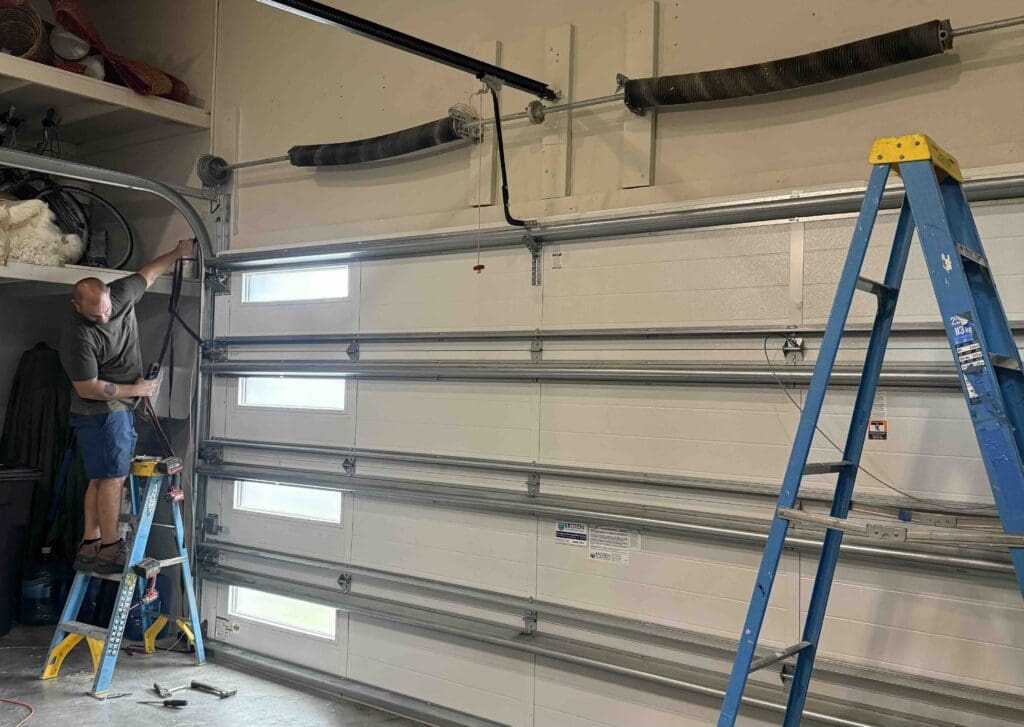
When our team handles a spring replacement, we size the spring to your door’s actual weight, replace springs in pairs when it makes sense (so you’re not back in a few months for the second one), and inspect the cables, rollers, and bearings while we’re in there. We finish by rebalancing the door and testing the opener’s safety reverse. Every repair is backed by our 1-Year Guarantee, we stock hurricane-rated parts, and same-day service is available — because a stuck garage door isn’t something most families can wait a week on.
Frequently Asked Questions
How long do garage door springs last? It depends on cycles more than years. Many springs last seven to twelve years, but heavy daily use or a corrosive, humid environment can shorten that. High-cycle springs last considerably longer.
Can I still use my door with a broken spring? You shouldn’t. Running the opener against a broken spring can damage the motor, bend the door, or drop it unexpectedly. Leave the door down and call for service.
Should I replace one spring or both? If your door uses two springs, replacing both is usually the smart move — they’ve endured the same wear, so the second one typically isn’t far behind.
How fast can you come out? We offer same-day and 24/7 emergency service across the Kissimmee and Orlando area.
Get It Fixed Fast — Central Florida’s Garage Door Team
If your door is showing any of these signs, don’t wait for it to strand you. Our technicians handle spring replacements every day across the region — including garage door repair in Kissimmee and fast service from our Orlando garage door team. Call Kissimmee at 689-319-8691 for same-day help.
We’re a licensed Florida General Contractor (DBPR) who has served Kissimmee for over 8+ years, and our neighbors have rated our Kissimmee location 4.9 stars across 726 reviews.