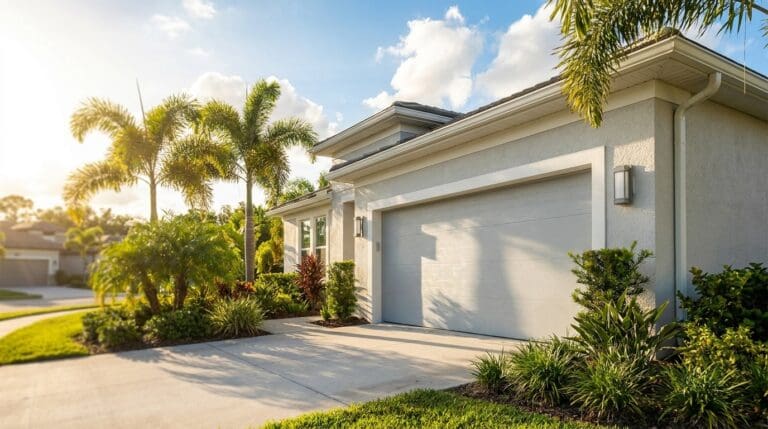
Your garage door is the largest moving part of your home, and it works hard: the average door opens and closes thousands of times a year. A little routine maintenance keeps it running smoothly, extends the life of the parts, and helps you catch small problems before they turn into a door that won’t open. In Central Florida, where heat and humidity are tough on hardware, that upkeep matters even more. Here’s a simple checklist any homeowner can follow.
Why Maintenance Matters More in Florida
Our climate is hard on a garage door in ways drier regions never deal with. Humidity encourages rust on springs, cables, and hardware, heat degrades weather seals, and homes closer to the coast face salt in the air that speeds up corrosion. Regular maintenance slows all of that down. It also keeps the safety features working, which is the part that protects your family, not just the door.
Your Garage Door Maintenance Checklist
Work through these steps a few times a year. None of them require special tools:
- Look and listen. Watch the door go through a full cycle. It should move smoothly and evenly, without jerking, and both sides should rise at the same rate. New noises or hesitation are early warning signs.
- Tighten the hardware. All that movement vibrates bolts and brackets loose over time. Check the roller brackets and track fasteners and snug up anything that has worked loose.
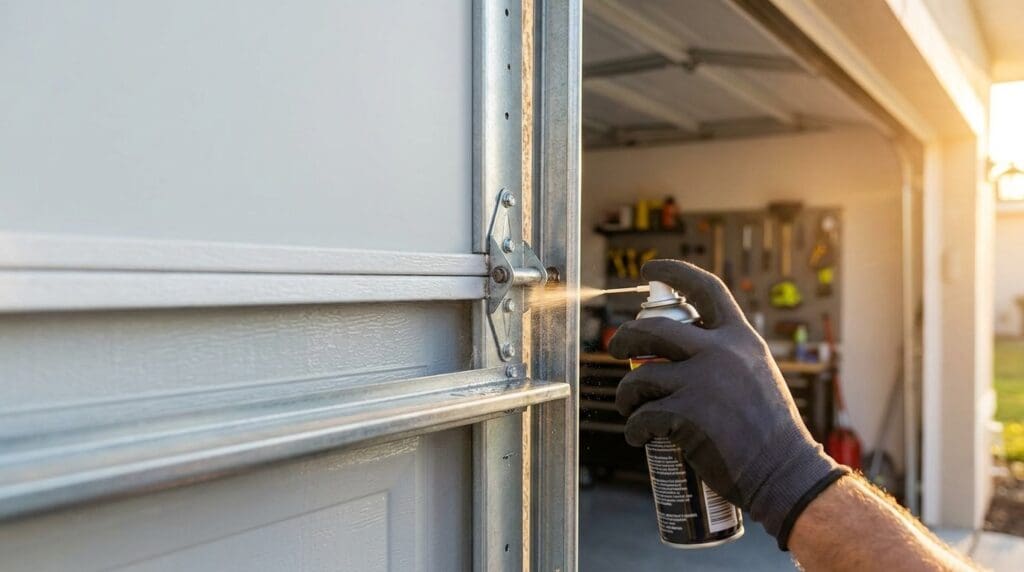
- Lubricate the moving parts. A few times a year, apply a proper garage door lubricant (silicone or lithium-based) to the rollers, hinges, and springs. Avoid general-purpose spray oils, which attract grime and aren’t true lubricants.
- Test the balance. With the door closed, pull the manual release and lift the door by hand. A well-balanced door lifts easily and stays put around halfway. If it feels heavy or drops, the spring balance needs a professional adjustment.
- Test the safety features. With the opener connected, place a solid object (like a roll of paper towels) in the door’s path and close it. The door should reverse when it touches the object. Then wave an object through the photo-eye beam near the floor while closing; the door should stop and reverse.
- Clean the tracks. Wipe debris out of the tracks so rollers have a clear path. Don’t lubricate the inside of the tracks themselves, since that just collects dirt.
- Inspect the weather seals. Check the bottom seal and side seals for cracks or gaps. Good seals keep out heat, wind-driven rain, and pests, which matters year-round here.
- Look over the cables and springs. Visually check for fraying, rust, or gaps in the coils. Look only. Never try to adjust or repair them yourself, since they’re under high tension.
How Often Should You Do This?
A quick look-and-listen every few months is enough to catch most issues early. Plan a fuller run through the checklist once or twice a year, and lean toward the more frequent end if you live near the coast or use your door many times a day. Lubrication in particular is worth doing more often in our humidity, since it also helps hold rust at bay.
What to Leave to a Professional
Homeowner maintenance covers the safe, no-tension tasks. A few jobs should always go to a technician: adjusting or replacing springs and cables, correcting a door that won’t balance, and setting the opener’s force and travel limits. These involve high tension or safety-critical settings, and getting them wrong is dangerous. A yearly professional tune-up is a good complement to your own checks, especially before hurricane season.
Signs It’s Time to Call for a Tune-Up
Beyond your routine, call for service if the door feels heavy by hand, moves unevenly, has become noticeably louder, hesitates or reverses without reason, or shows rust and wear on the springs or cables. Catching these early is almost always cheaper and safer than waiting for a breakdown.
Frequently Asked Questions
What kind of lubricant should I use on a garage door? A silicone or lithium-based garage door lubricant. Skip general-purpose spray oils, which aren’t designed for the job and can attract dirt.
How do I know if my door is balanced? Disconnect the opener with the manual release and lift the door by hand. If it rises easily and holds around the halfway point, it’s balanced. If it’s heavy or slams down, have it serviced.
Can maintenance really extend my door’s life? Yes. Keeping parts clean, lubricated, and tight reduces wear and helps you catch small problems before they cascade into bigger, costlier ones.
Should I test the safety reverse myself? The obstruction and photo-eye tests are safe and worth doing regularly. If the door fails either test, stop using it and call a professional.
Book a Professional Tune-Up
Regular maintenance is the easiest way to avoid a surprise breakdown, and a yearly professional check catches what a homeowner can’t. Our technicians serve the whole region, including garage door service in Oviedo and our Kissimmee garage door team. Call our Kissimmee headquarters at 689-319-8691 to schedule a tune-up.
We’re a licensed Florida General Contractor (DBPR) with 8+ years serving Central Florida from our Kissimmee headquarters, offering 24/7 service and a 1-Year Guarantee.