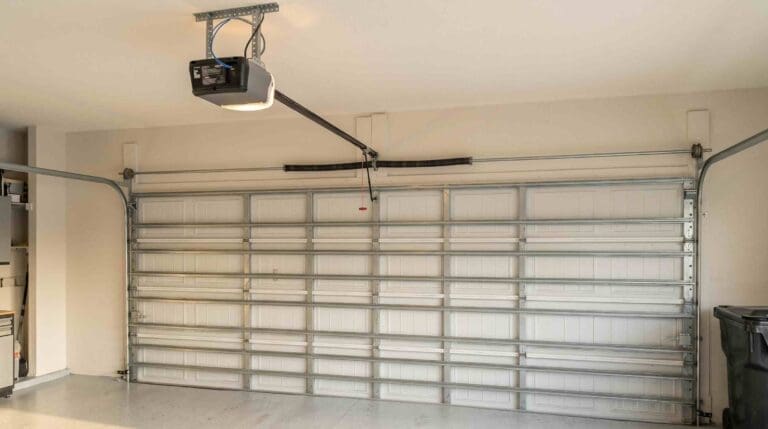
You press the button, the garage door starts down, then it stops and goes right back up while the opener light blinks. In most homes that behavior points to one thing: the safety sensors.
This guide explains how garage door sensors work, why they act up so often in Central Florida’s heat, humidity and storm season, what you can check on your own, and when it is smarter to call a technician.
How garage door safety sensors work
Modern automatic garage door openers use a pair of photo eye sensors mounted near the bottom of the door tracks, one on each side, no more than about six inches above the floor. One unit sends an invisible infrared beam and the other receives it. If anything breaks the beam while the door is closing, the opener reverses the door.
Federal safety rules have required this kind of entrapment protection on residential openers sold in the United States since 1993. When the opener cannot confirm that the beam is intact, it assumes something is in the way and refuses to close. That is why a sensor fault usually shows up as a door that opens normally but will not close.
Signs the sensors are the problem
- The door starts to close, then reverses to fully open.
- The opener lights flash or the unit clicks several times when you try to close the door.
- The door closes only if you press and hold the wall button the whole way down.
- One of the small LED lights on the sensors is off, dim or flickering.
If the door will not open at all, the cause is usually something else. Our guide on what to do when a garage door won’t open covers those cases.
Common causes of garage door sensor problems
1. Something is blocking the beam
A trash bin, a broom handle, a bike tire, a storage box or even a thick cobweb can interrupt the beam. Because the sensors sit so close to the floor, items stored along the garage walls tend to drift into their path. Clear the area around both sensors and try the door again.
2. Dirty or foggy lenses
Florida garages collect dust, pollen and grass clippings quickly, and lovebug season does not help. Humid mornings can also leave a film of condensation on the lens. Wipe both lenses gently with a soft, dry cloth. Skip harsh cleaners and abrasive pads, which can scratch the plastic and make the problem permanent.
3. Sensors knocked out of alignment
The brackets that hold the sensors are thin metal, so a bump from a trash bin, a lawn mower or a car bumper is enough to turn one off target. The two units need to point directly at each other at the same height. Most sensors have a small LED that glows steadily when the beam is aligned and blinks or goes dark when it is not. Loosen the wing nut on the blinking sensor, adjust it by hand until the light stays solid, then tighten it again.
4. Direct sunlight on the receiving sensor
Low morning or late afternoon sun can overwhelm the receiving eye, which is common in garages that face east or west. The clue is a door that fails only at certain hours and works fine at night. Shading the receiving sensor with a simple sun shield often solves it. A technician can also swap the sending and receiving units so the receiver faces away from the sun. If the problem keeps coming back, our garage door team in Clermont can take a look.
5. Damaged or corroded wiring
Thin low voltage wires run from each sensor up to the opener. Staples can pinch them, rodents can chew them, and Florida humidity can corrode the connections over time. A power surge during a summer thunderstorm can also damage the sensors or the opener’s circuit board. If one LED is completely off and the wire looks damaged, it is time for a professional garage door repair rather than a home fix.
6. Moisture and storm damage
Wind-driven rain, water pooling on the garage floor and pressure washing can all push water into a sensor housing. After a tropical storm or hurricane, check the sensors along with the rest of the door. Sensors that have taken on water usually need to be replaced.
7. Worn out sensors or an opener fault
Sensors do not last forever. If they are clean, aligned and properly wired but the door still refuses to close, the sensors themselves or the opener’s logic board may be failing. At that point the system needs testing by someone who handles garage door opener installation and repair every day.
Safe fixes you can try yourself
- Clear everything away from both sensors and from the door’s path.
- Wipe both lenses with a soft, dry cloth.
- Check the LED on each sensor. Both should be steady. Your opener manual explains what the colors mean on your model.
- Gently adjust the blinking sensor until its light stays solid, then tighten the bracket.
- Test the door: start closing it and pass a broom handle through the beam. The door should reverse right away.
If the door still will not close and you need to secure the house, most wall controls let you close the door by pressing and holding the button until the door is fully down. Treat this as a temporary measure only, and keep people, pets and vehicles clear while you watch the door close.
What not to do
Never bypass, tape together or remove the sensors, and never remount them up high where nothing can cross the beam. They exist to stop a heavy door from closing on a child, a pet or a vehicle. A door with disabled sensors is unsafe, and it is likely to be flagged in a home inspection.
Stay away from the springs, cables and tracks as well. Those parts are under high tension and can cause serious injury. Any work on them belongs to a trained professional.
When to call a professional
- A sensor LED stays off after cleaning and alignment.
- The wiring is chewed, cut or corroded.
- The problem started after a storm, a power surge or water in the garage.
- Both sensor lights are steady but the door still reverses, which can point to travel or force settings, a track problem or a spring issue.
- The sensors are old and need to be replaced with units compatible with your opener.
Garage Door Experts works from our Kissimmee headquarters and our Clermont location, with same-day service and 24/7 emergency service when a door is stuck open and you cannot secure your home. Our licensed technicians handle sensor and opener problems through our garage door services in Windermere and our garage door services in Oviedo, along with the rest of Central Florida.
Frequently asked questions
Why does my garage door close only when I hold the wall button?
On most openers, holding the wall button overrides the sensors. If that is the only way your door closes, the opener is not getting a clear signal from the photo eyes. Clean and align them, and call a technician if the lights still do not stay steady.
Can I replace garage door sensors myself?
Some homeowners do, but the new sensors must be compatible with the opener’s brand and model, and the wiring has to be correct. A mistake can leave you with a door that will not close, or worse, a door with no working safety protection. For most people, professional installation is the safer choice.
Do garage door sensors need maintenance?
Yes, but very little. Wipe the lenses about once a month, more often during pollen and lovebug season, and test the reversal with a broom handle. After a major storm, check the sensors and wiring for water or impact damage.
Need help with garage door sensors in Central Florida?
Garage Door Experts has been operating for more than 14 years as a licensed Florida contractor, and our work is backed by a 1-year guarantee. If your garage door will not close, or the sensors keep acting up, call us at 689-319-8691 or contact us online to schedule same-day service.